The Invisible Silent Killer: Why We Must Prioritize "Metabolic Dysfunction-Associated Steatotic Liver Disease (MASLD)"
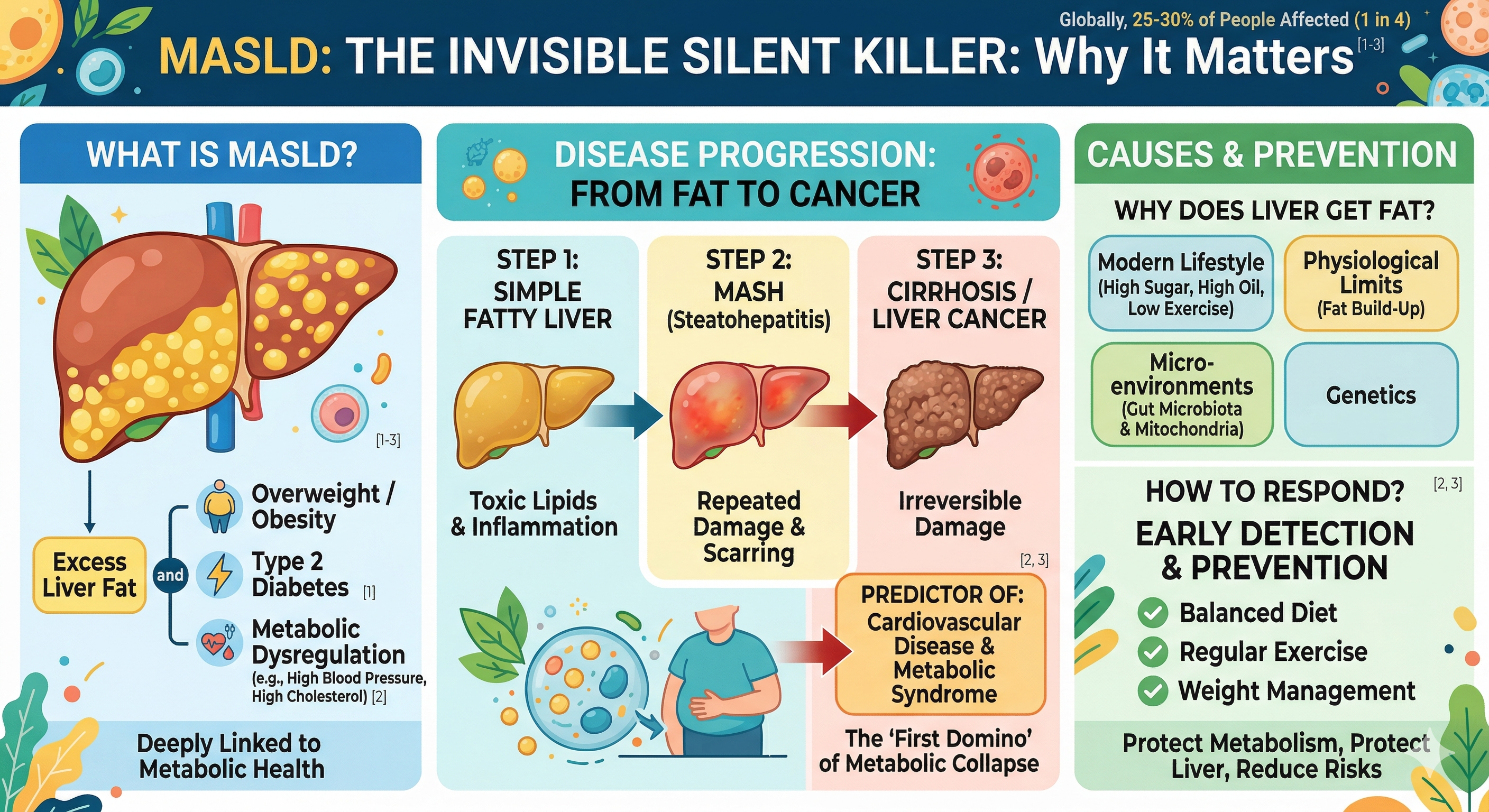
In the hustle and bustle of modern life, have you ever stopped to check on your liver health? According to the latest research, a staggering 25% to 30% of the global population is currently affected by Metabolic Dysfunction-Associated Steatotic Liver Disease (MASLD) [1]. This means that for every four people, one person’s liver is quietly being occupied by fat.
What is MASLD? It’s More Than Just a "Fatty Liver"
While previously referred to as Non-Alcoholic Fatty Liver Disease (NAFLD), the medical community now favors the term MASLD because it highlights the critical link to our metabolic function.
Simply put, MASLD is defined as the accumulation of excess fat in the liver (steatosis) accompanied by at least one of the following conditions:
Overweight or Obesity
Type 2 Diabetes
Metabolic Dysregulation (such as high blood pressure or high cholesterol/lipids)
This definition emphasizes that liver health is deeply interconnected with the body’s overall metabolic environment.
A Chain Reaction: From Inflammation to Cancer
The most dangerous aspect of fatty liver disease is its progressive nature. What begins as simple fat accumulation can evolve over time. As the liver becomes overloaded, it produces toxic lipids that trigger inflammation, leading to Metabolic Dysfunction-Associated Steatohepatitis (MASH).
If these warning signs are ignored, the liver undergoes repeated damage and scarring, eventually resulting in irreversible cirrhosis or even liver cancer [1-3]. Furthermore, research indicates that MASLD is a potent predictor of cardiovascular disease and metabolic syndrome [2, 3]. In essence, a fatty liver is not just a localized issue; it is often the "first domino" to fall in the collapse of systemic metabolism.
Why Does the Liver Get "Fat"? Uncovering the Causes
The liver acts as the body’s chemical plant, processing the sugars and fatty acids we consume. However, when the plant is "flooded," operations fail. Scientists believe the causes of MASLD are highly complex, driven by four primary factors [2, 3]:
Lifestyle: Modern diets high in sugar and oil, combined with a lack of exercise, are the leading culprits.
Physiological Constraints: When liver cells cannot properly export triglycerides, fat builds up like "unauthorized construction" within the organ.
Micro-environments: An imbalance in gut microbiota and impaired function of mitochondria (the cell's power plants) can exacerbate the condition.
Genetics: Some individuals are genetically predisposed to store fat in the liver more easily.
How Should We Respond?
Faced with this global chronic disease epidemic, "early detection and early prevention" is the golden rule. Through a balanced diet, regular exercise, and weight management, most early-stage MASLD can be reversed or controlled.
Understanding the importance of fatty liver disease is about more than just protecting one organ—it is about safeguarding your total metabolic health and staying clear of the threats posed by cardiovascular disease and cancer.
References
Schwenger, K.J.; Allard, J.P. (2014). Clinical approaches to non-alcoholic fatty liver disease. World J. Gastroenterol.
Fazel, Y., et al. (2016). Epidemiology and natural history of non-alcoholic fatty liver disease. Metabolism.
Dokmak, A., et al. (2021). The Impact of Non-alcoholic Fatty Liver Disease in Primary Care. Am. J. Med.