Home
/ 部落格列表
/ English
/ The Regulatory Role of Carbohydrate Metabolism and GNMT in MASLD
文章分類
The Regulatory Role of Carbohydrate Metabolism and GNMT in MASLD
2026-04-02
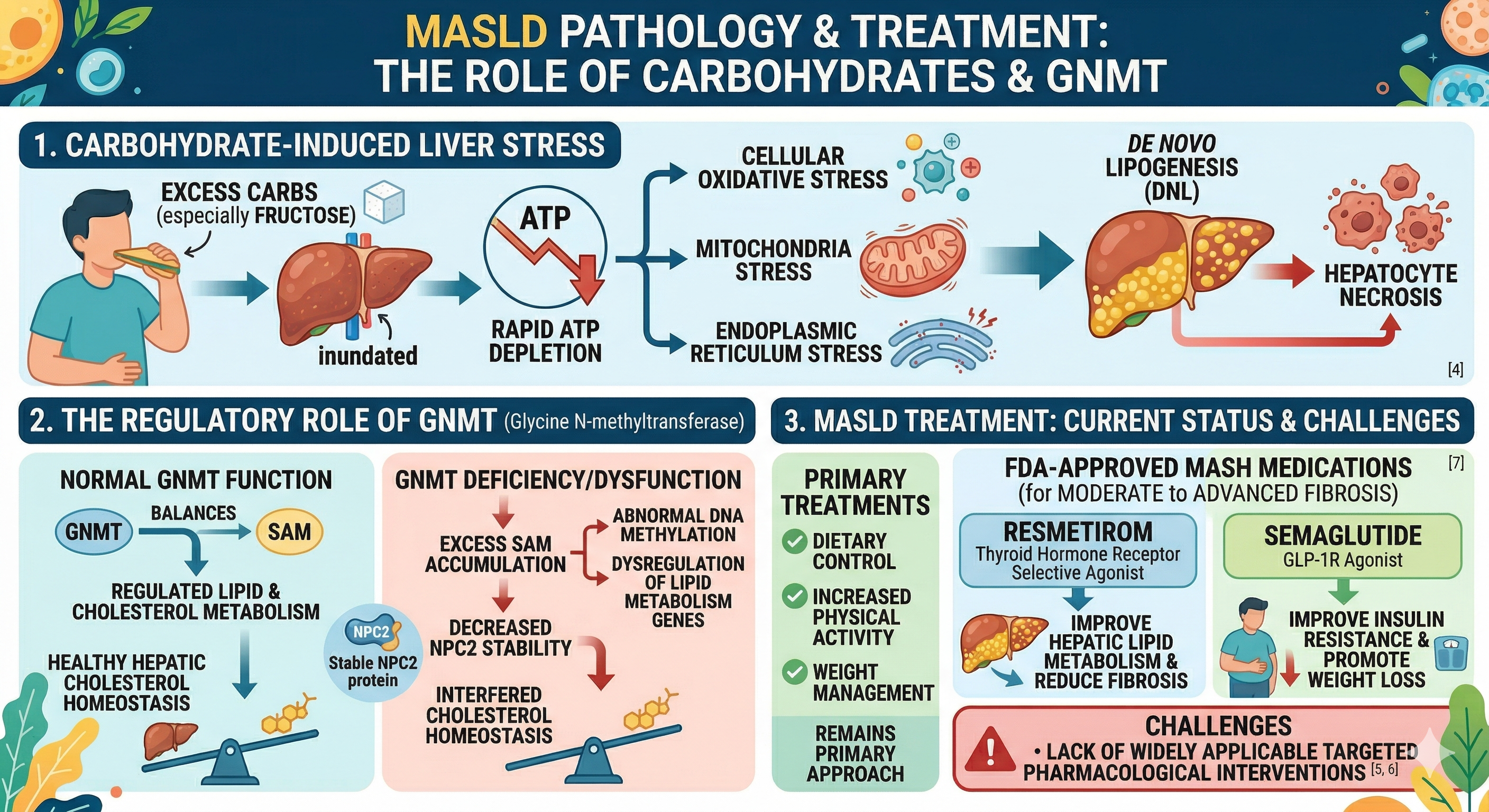
Carbohydrate metabolism plays a pivotal role in the development of Metabolic Dysfunction-Associated Steatotic Liver Disease (MASLD). When excess carbohydrates—particularly fructose—are consumed, the liver metabolizes them by rapidly depleting adenosine triphosphate (ATP). This process not only triggers intracellular oxidative stress but also places significant strain on the mitochondria and the endoplasmic reticulum. This persistent metabolic stress can lead to hepatocyte (liver cell) necrosis and significantly increase lipid accumulation in the liver through the de novo lipogenesis (DNL) pathway.
In this context, the multifunctional protein Glycine N-methyltransferase (GNMT) plays an indispensable regulatory role in hepatic carbohydrate and lipid metabolism [4]. As the most abundant methyltransferase in the liver, GNMT is responsible for regulating the concentration of S-adenosylmethionine (SAM)—the body's primary methyl donor—and is directly involved in the signaling pathways of energy metabolism.
When GNMT function is impaired or its expression decreases, it leads to an excessive accumulation of SAM, which in turn induces abnormal DNA methylation and dysregulation of lipid metabolism genes. Research indicates that GNMT deficiency affects the stability of the Niemann-Pick type C2 (NPC2) protein, thereby interfering with cholesterol homeostasis in the liver. This demonstrates that the scope of GNMT's influence has expanded from simple carbohydrate regulation to the complex maintenance of lipid and cholesterol balance [4].
Current Status and Challenges in MASLD Treatment
Currently, weight loss and lifestyle modifications (such as dietary control and increased physical activity) remain the primary treatments for MASLD. Despite the scientific community's deep understanding of its pathological mechanisms, there is still a lack of widely applicable, targeted pharmacological interventions [5, 6].
As of now, only two types of medications have received approval from the U.S. Food and Drug Administration (FDA) for treating Metabolic Dysfunction-Associated Steatohepatitis (MASH) with moderate to advanced fibrosis:
Resmetirom: A selective agonist of the thyroid hormone receptor-$\beta$, designed to improve hepatic lipid metabolism and reduce fibrosis.
Semaglutide: A glucagon-like peptide-1 receptor (GLP-1R) agonist, which achieves therapeutic effects primarily by improving insulin resistance and promoting weight loss [7].
References
Liao, Y.-J., et al. (2012). Glycine N-methyltransferase deficiency affects Niemann-Pick type C2 protein stability and regulates hepatic cholesterol homeostasis. Mol. Med.
Allard, J., et al. (2019). Drug-induced liver injury in obesity and nonalcoholic fatty liver disease. Adv. Pharmacol.
Moore, M.P., et al. (2020). A Fad too Far? Dietary Strategies for the Prevention and Treatment of NAFLD. Obesity.
Tilg, H., et al. (2026). Metabolic Dysfunction-Associated Steatotic Liver Disease in Adults: A Review. JAMA.